What does the VALORANT Champions Shanghai group stage format mean for the 2026 world title race?
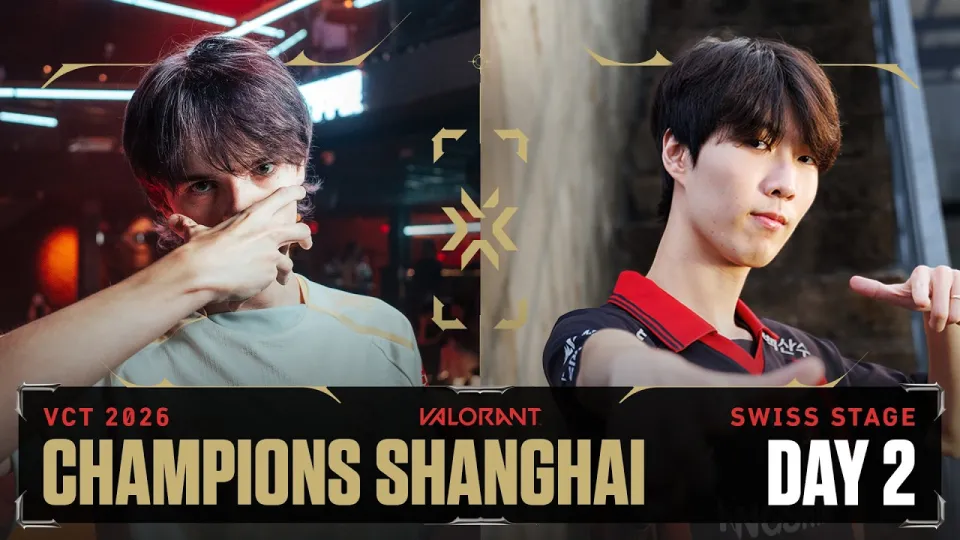
Video: VALORANT Champions Shanghai — Group Stage — Day 2
You can order the same kind of articles for your own video to boost it on YouTube and Google. Just message the Telegram bot @sat_sit_bot. It writes articles around your video, embeds the video and publishes them on popular niche websites (no ads). Free trial — 50 articles.
· based on the channel VALORANT Champions Tour
Key takeaways
- VALORANT Champions Shanghai runs from September 24 to October 18 and crowns the 2026 world champion.
- Sixteen teams qualified from four regions: Americas, CN, EMEA and Pacific.
- The group stage uses a double-elimination bracket, so one early loss does not eliminate a team.
- Day 2 of the group stage was published by the VALORANT Champions Tour channel on September 25, 2026.
- China received four slots at the event, a point viewers debated heavily in the comments.
VALORANT Champions Shanghai is the 2026 world championship, and its group stage is a double-elimination bracket where sixteen teams from the Americas, CN, EMEA and Pacific fight for a place in the playoffs. The event runs from September 24 to October 18, and the group stage decides which teams advance and which are sent home before the main stage. The VALORANT Champions Tour publishes the full match VODs on its channel, and you can follow the bracket and schedule through the official esports account on X.
How the VALORANT Champions Shanghai group stage is structured
The group stage is the first competitive phase of VALORANT Champions Shanghai, and it uses a double-elimination format. Sixteen teams are split into four groups of four, seeded from their regional league results. Each group plays a winner's match, an elimination match and a decider, so every team gets at least two matches before the bracket cuts them. The top two teams from each group move on to the playoffs, while the bottom two are eliminated. That structure is why a single bad map does not end a team's tournament, and why a strong opening win can buy a team a second life in the lower bracket. The format rewards consistency across maps rather than one hot series, and it is the main reason upsets in the group stage hurt less than they do in a single-elimination playoff round.
What happened on Day 2 of the group stage
Day 2 of the group stage, published by the VALORANT Champions Tour on September 25, 2026, covered the second round of group matches. The broadcast ran through several series back to back, and the pacing was fast enough that viewers in the comments joked about it being a speedrun day. The day included a mix of winner's matches and elimination matches, which is where the bracket starts to separate contenders from teams that are still finding their form. Because the group stage is double elimination, a loss on Day 2 does not remove a team from the tournament, but it does push them into the lower bracket and force them to win consecutive series to survive. The VOD is useful for anyone tracking map picks, agent compositions and pistol-round trends across regions, since it shows the same meta being tested by teams with very different playstyles.
Regional strength and the China slot debate
One of the loudest debates around VALORANT Champions Shanghai concerns regional representation, especially the four slots given to the CN region. Some viewers argued in the comments that China's slots would be better merged into Pacific, pointing to the results of the day as evidence that the region is not yet at the level of the other three. Others pushed back by noting that the region is still developing and that international experience is exactly what raises its level over time. The argument is not unique to VALORANT: every global esport with regional slots faces the same tension between competitive balance and regional growth. What the group stage actually shows is that the gap is not uniform. Some CN teams compete comfortably at the international level, while others struggle with the pace and the read-heavy macro that top EMEA and Pacific teams bring. The four-slot allocation is a development decision as much as a competitive one, and the group stage is where that decision gets tested in public.
Reading the scorelines and the level of play
A common reaction to Day 2 was that some series looked one-sided, with viewers comparing certain maps to ranked games at very different skill levels. That perception usually comes from two things: a large gap in team coordination, and the way the double-elimination bracket pairs teams with similar records rather than similar strength. When a team loses its opening match, it drops into an elimination game against another team that also lost, which can produce lopsided results if one of them has already adapted to the event meta. The opposite is also true: winner's matches tend to be closer because both teams are coming in with momentum. For anyone evaluating the region strength debate, the useful signal is not the scoreline alone but how a team loses, whether it adjusts its map picks, and whether its mid-round calls hold up under pressure in later rounds.
Broadcast pacing, interviews and viewer experience
The VALORANT Champions Shanghai broadcast has drawn mixed feedback about pacing. Some viewers found the translation of post-match interviews slow, noting that a short answer can take noticeably longer once it is interpreted on air. Others appreciated having access to player voices from every region, which is rare in a single global event. The broadcast also mixes live matches with analysis segments and sponsor features, and the group stage days are long because they include multiple series. For viewers who want to follow the tournament without spoilers, the VALORANT Champions Tour channel posts full VODs, and community timestamps in the comments make it possible to jump straight to a specific series. The trade-off is that live viewing gives you the bracket context as it develops, while VOD viewing lets you skip the downtime.
What the group stage results mean for the playoffs
By the end of the group stage, the bracket narrows to eight teams, and the seeding from groups determines playoff matchups. Teams that finish first in their group get a more favorable path, while teams that survive through the lower bracket arrive with more matches played and more exposed strategies. That is why the group stage is not just a qualifier: it is a scouting window. Coaches use it to see which agent compositions are working on each map, which teams are willing to play for late-round executes, and which players are comfortable taking over rounds individually. In a double-elimination group stage, the teams that adapt fastest between matches usually advance, and the ones that rely on a single comfort pick often get punished in the decider. The matches from Day 2 are part of that data set, and the full VOD is available on the VALORANT Champions Tour channel.
Useful links
- Official VALORANT Esports on X: https://x.com/valorantesports
- Facebook: https://www.facebook.com/ValorantEsports/
- Instagram: https://www.instagram.com/valorantesports/
- TikTok: https://www.tiktok.com/@valorantesports
- Twitch: https://www.twitch.tv/valorant
Final takeaway
The VALORANT Champions Shanghai group stage is a double-elimination phase that gives sixteen teams from four regions a second chance, and it is the clearest test of whether regional depth matches regional hype. Day 2 showed both the gap between top teams and developing ones and the value of the format, since a single loss does not end a run. The debate over China's four slots will continue as long as results stay uneven, but the group stage is also where those teams gain the international reps that regional leagues cannot provide. For anyone following the 2026 title race, the group stage VODs are the best way to track meta shifts before the playoffs begin. Follow the official account on X for bracket updates, schedules and announcements, and watch the full match coverage on the VALORANT Champions Tour channel.
Questions & answers
How many teams play in the VALORANT Champions Shanghai group stage?
Sixteen teams compete in the group stage, drawn from the Americas, CN, EMEA and Pacific regions. They are split into four groups of four and play a double-elimination bracket within each group. The top two teams per group advance to the playoffs, while the bottom two are eliminated.
Why did some viewers say Day 2 looked like a speedrun?
Day 2 packed several series into a single broadcast, and many of them ended quickly because of large gaps in team coordination. In a double-elimination group stage, teams that lose early can face opponents with similar records rather than similar strength, which sometimes produces one-sided maps. The comment was mostly about the fast pace of the day, not the format itself.
Is it fair that China gets four slots at VALORANT Champions?
It is a development decision as much as a competitive one. Four slots give CN teams regular international experience, which is the fastest way to close the gap with EMEA and Pacific. Critics argue the slots would be more competitive if merged into Pacific, while supporters point out that regional investment needs a path to the global stage.
Where can I watch the full VALORANT Champions Shanghai matches?
The VALORANT Champions Tour channel publishes full match VODs, including the Day 2 group stage broadcast. You can also find schedules and bracket updates through the official esports account on X at https://x.com/valorantesports. Live coverage is available on the official Twitch and YouTube channels.
Source: VALORANT Champions Shanghai — Group Stage — Day 2 · Markdown version